When a cyberattack reaches the fridges
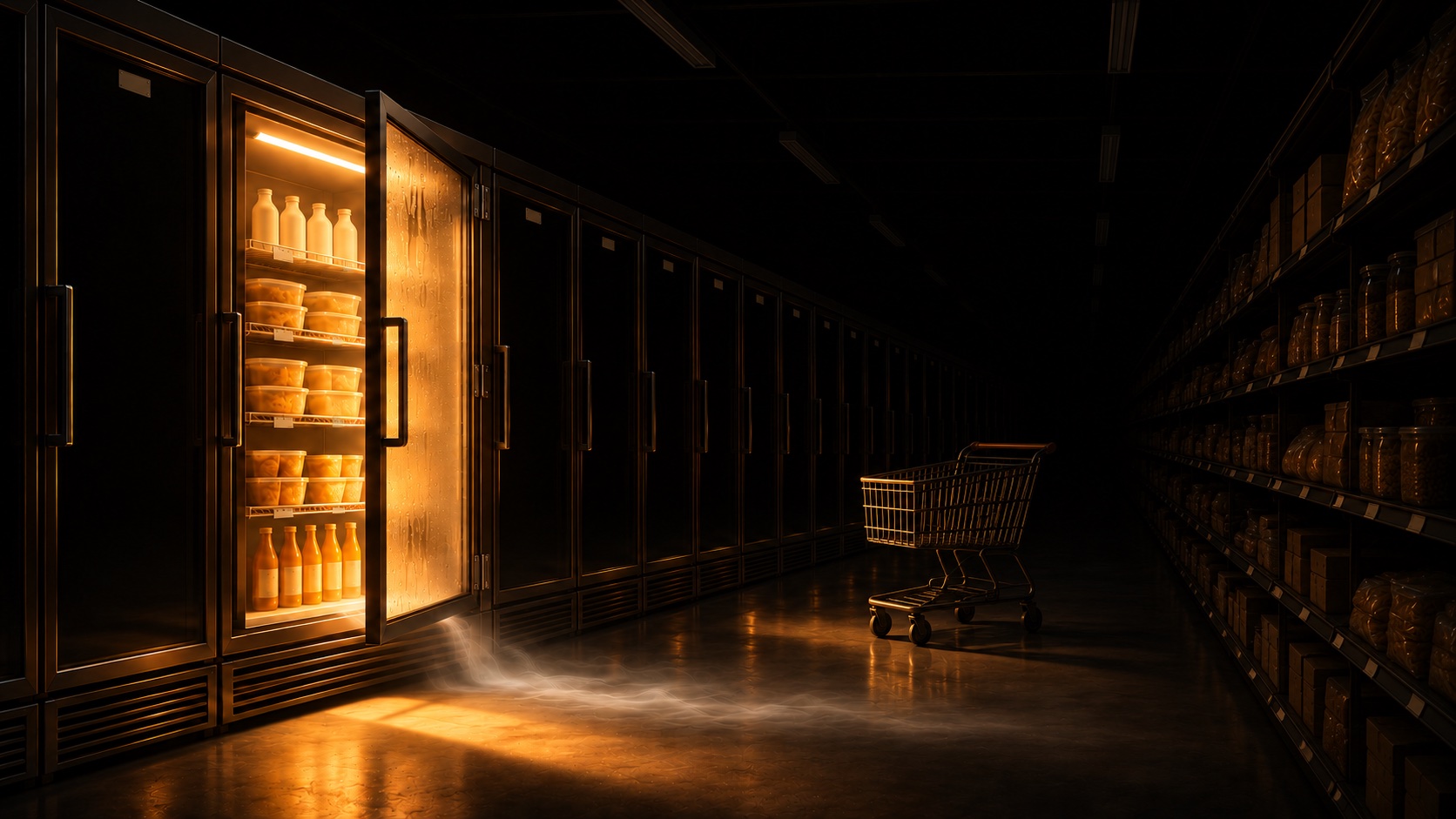
In early November, seven Intermarché stores in Portugal were hit by a cyberattack, and three lost products. According to Portugal's National Cybersecurity Centre, the attack "is presumed to have originated in unauthorized access to the remote temperature controller" of the fridges, which belongs to an external provider. The wave had started in France, in October, where it hit hundreds of stores.
Over the following two weeks, the website of IHRU, the public housing institute, appeared with its photographs replaced by the image of a camping panda, and the website of ASAE, the food and economic safety authority, with an AI-generated image of José Sócrates, a former prime minister, and the phrase "Hacked by José Sócrates". In October, according to Check Point figures quoted in the press, each Portuguese organization suffered an average of 2,829 attacks per week, 41% more than a year earlier.
 Image: all rights reserved, via Público.
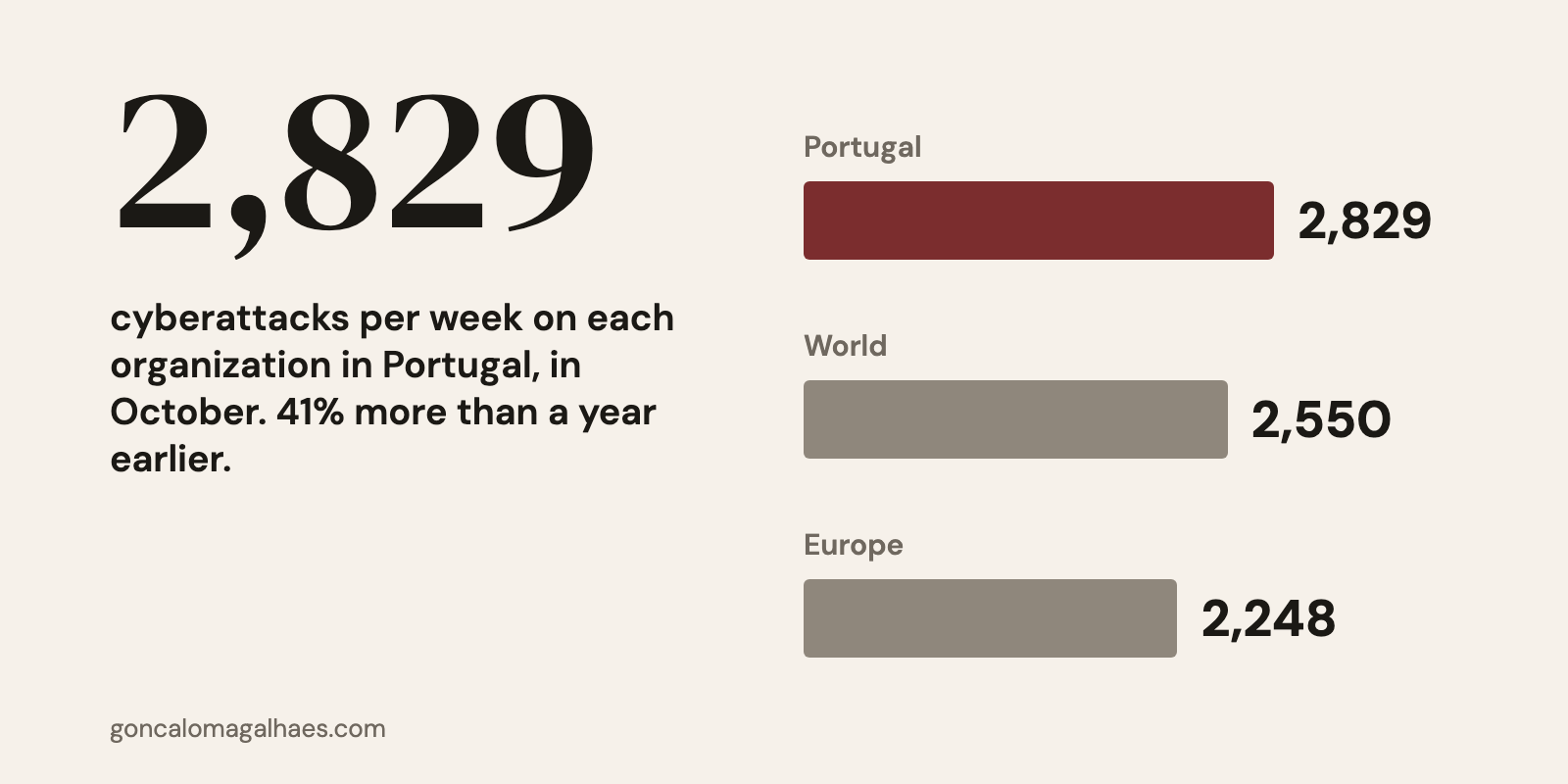
 Data: Check Point Research, via Executive Digest.
I once worked with smart IoT controllers, devices connected to the internet that are operated remotely, like the temperature controller of these fridges. And I remember realizing right away how fragile our structures are, when access is so easy to break. There was a time when, through work, my phone could water large farm fields, or switch off some light, or take a photograph of chickens in a gigantic poultry house!
Small pieces
None of these attacks has been linked to PHP2Shell, the two critical PHP flaws I wrote about a few days ago. The connection is a different one. Both point to how sensitive our infrastructures are, and how dependent they are on a few small dependencies that, in reality, can have devastating effects.
It is well known that much of our critical infrastructure depends on small pieces, often maintained by half a dozen volunteer developers serving the community. With the growing wave of vulnerabilities being found, these pieces take on a whole new image of fragility. In the Binance theft, one of the first steps was a tampered version of Homebrew, a tool developers use to install other tools.
After PHP2Shell, risikomonitor and EY Austria measured how many websites in each European country announced a vulnerable version of PHP. Portugal had the highest share, 14.4%; Slovakia the lowest, 2.5%. This figure is, indeed, very curious. No Portuguese person will be very surprised to learn that a large part of Portugal's software structure is old, but there aren't many conclusions that can be drawn from this alone.
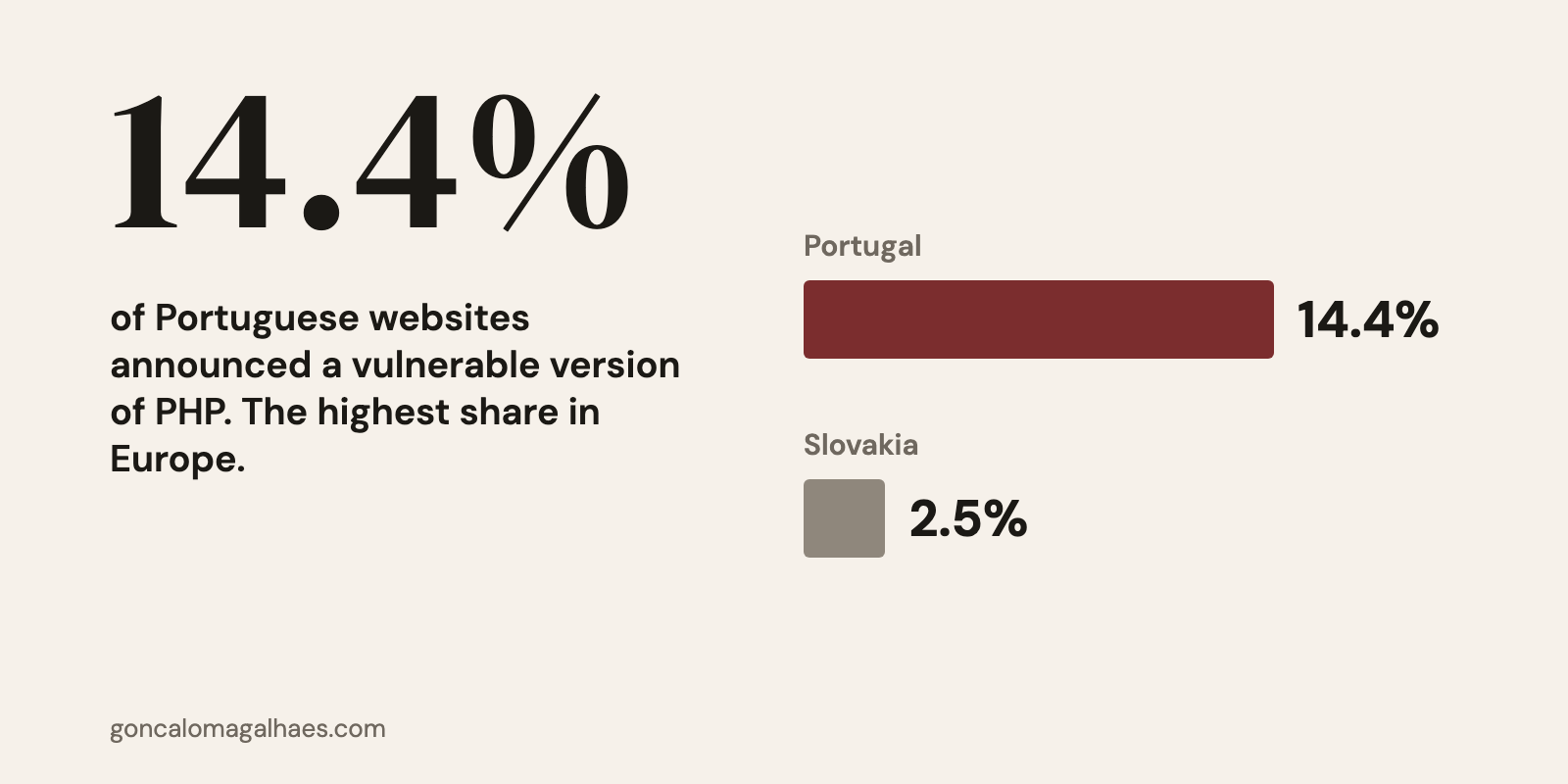
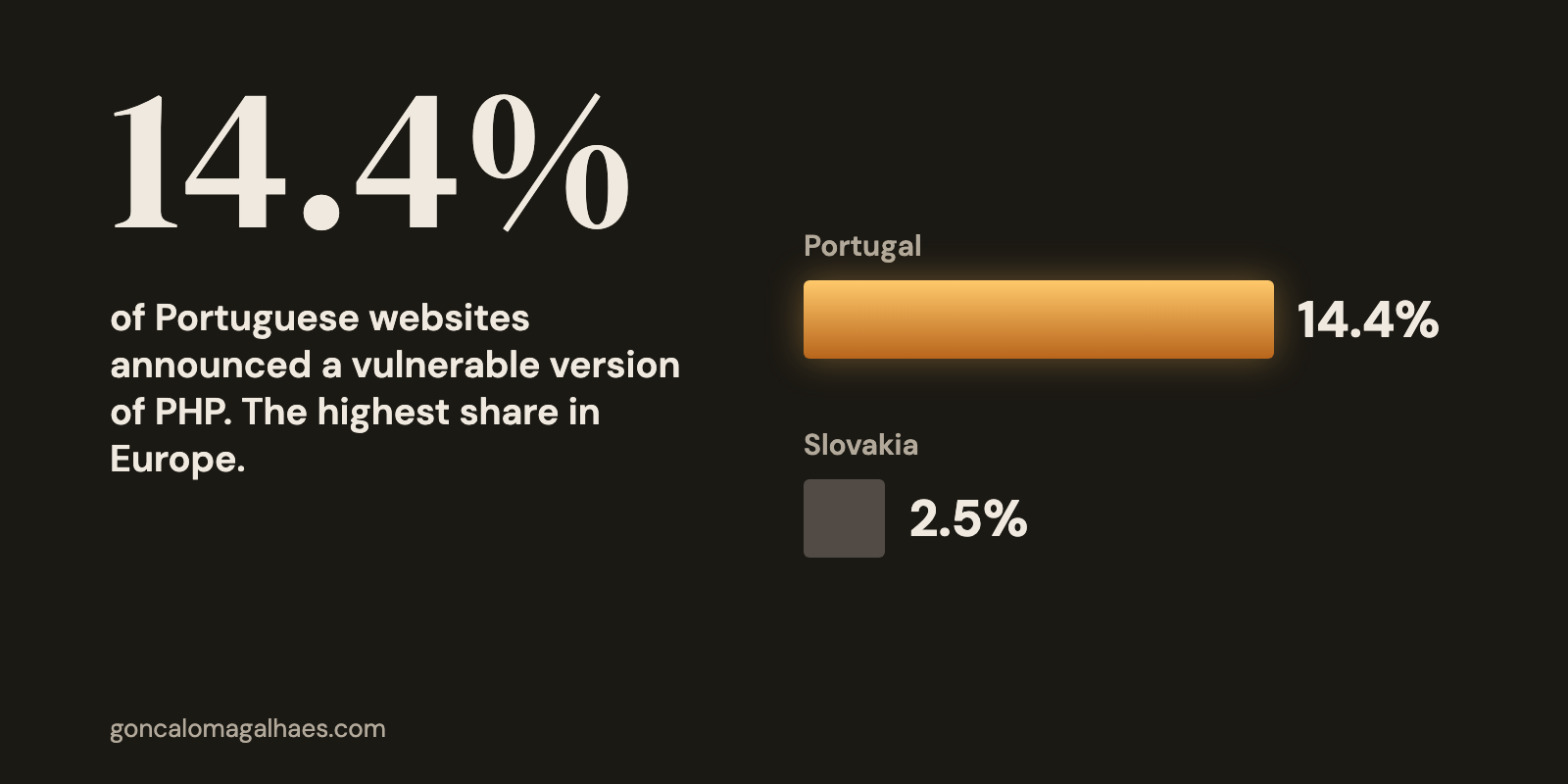 Data: risikomonitor and EY Austria, via Trending Topics.
At Immunefi, we always have to keep up not only with new vulnerabilities discovered in dependencies we use in our services, but also in our own systems, as happened recently with the critical bug in Brotli, a small compression library that curl and many other programs use. On some macOS systems, it meant updating certain things and even restarting certain machines in the organization. Because we have robust systems, it was all very quick to carry out autonomously. Such vulnerabilities often require every system to be updated and restarted, which naturally causes some disruption, though not much.
Risks we accept
As I said in another article, looking at dependencies and managing supplier risk is never really a company's core business. The fewer resources it has, the less time and energy it can spend on giving it any attention at all.
But even in larger organizations, where such resources do exist, having dependencies is almost always inevitable. Teams accept trade-offs, with more or less risk, to ensure the success of their endeavors. And this is perfectly normal. Ideally, mitigations are always put in place for each accepted risk, but sometimes that is very hard, expensive, or even impossible.
After the attack
If the chain were mine, the main value to be extracted would come from the provider's post-mortem, the report of what happened. It is necessary to understand in detail what happened, and what that says about the security of this provider's operations. Beyond that, it is necessary to know what was implemented so that nothing similar happens again.
Based on this new information and depending on the answers given, the risk Intermarché associated with this supplier may now be higher or lower, and that could even dictate whether the supplier is to be kept or replaced. At the same time, it would be ideal to find mitigations to implement on the chain's side, to make it more robust against upstream problems.
In the cases of IHRU and ASAE, as of November 16, I had found no official statement about what happened. Faced with this kind of thing, the State should at least acknowledge that something happened. That is what I praised in the way Binance handled its theft.
We will see more cases like these. This wave only seems to be growing with time and with the progress of AI models. It is becoming impractical not to have at least someone advising the company or team from a security point of view. And new startups will have to learn to navigate these difficulties and stay safe.