The Triumph of Generalists Over Specialists

When I embarked on my software career, I was always looking to expand my range of capabilities, trying to learn various programming languages and different frameworks. But the end goal would necessarily involve becoming a specialist in some specific area. In my case, it ended up being enterprise cybersecurity, and in the Web3 context.
However, with the advent of LLM agents breaking down barriers to entry in various sectors - but undoubtedly in the software sector - being a "Specialist" is beginning to lose relevance. Moreover, in a certain sense, one could even say it brings disadvantages…
The Generalist and the Specialist
There are different archetypes of the software engineer. These are distinguished not only by their specialization but also by the culture in which they operate, the soft skills they master and employ in the professional context (and often in their personal life). Different companies end up hiring different archetypes, sometimes without realizing it, but generally aligned with that company's particular situation and what it values at the moment.
A prominent list of these archetypes is presented in an article by Drew Hoskins, author of the book The Product-Minded Engineer, based on his experience working at Meta and Stripe. Let's focus on the Generalist and the Specialist.
- The Generalist (Meta, Stripe) - Versatile career learner who quickly ramps up in new areas.
- The Specialist / Domain Expert (Meta, Stripe) - Deeply knowledgeable in a particularly valuable area such as Security, Machine Learning, or Payments.
The path of most software engineers has as its default goal reaching the milestone of Specialist. On the contrary, becoming a Generalist was never an engineer's goal. After all, as much as the quality of "versatile learner" is commendable and desired by many, it's hard to think how someone can add value to a company or organization without necessarily standing out as a Specialist.
And yet, in the face of this new business reality where everything uses AI, where everything must be agentic, and where everything is changing rapidly, the Generalist has the advantage over the Specialist.
This is a business reality that changed only very recently, with the advent of impressive tools like Claude Code. The gap between having a good idea and reaching an MVP has decreased dramatically. But above all, the barrier to entry for using any technology or application has decreased to the point where anyone can use such tools at a quasi-Specialist level.
The Generalist is more flexible to learn and adapt. Precisely because they're not tied to the Specialist's details, they can use Artificial Intelligence to climb higher, even in the Specialist's area. This speed, flexibility, and optimistic imagination, combined with increasingly competent models and agents, is powering the Generalist's victory. And the business environment is starting to recognize this. Furthermore, and at least for now, the Specialist has a higher hourly rate than the Generalist. And yet, the return in value to the company is no longer proportionally greater.
In practice, this is already happening in different contexts. I have even seen this change happening up close, both in my work and in that of my colleagues.
The Google Workspace Monster
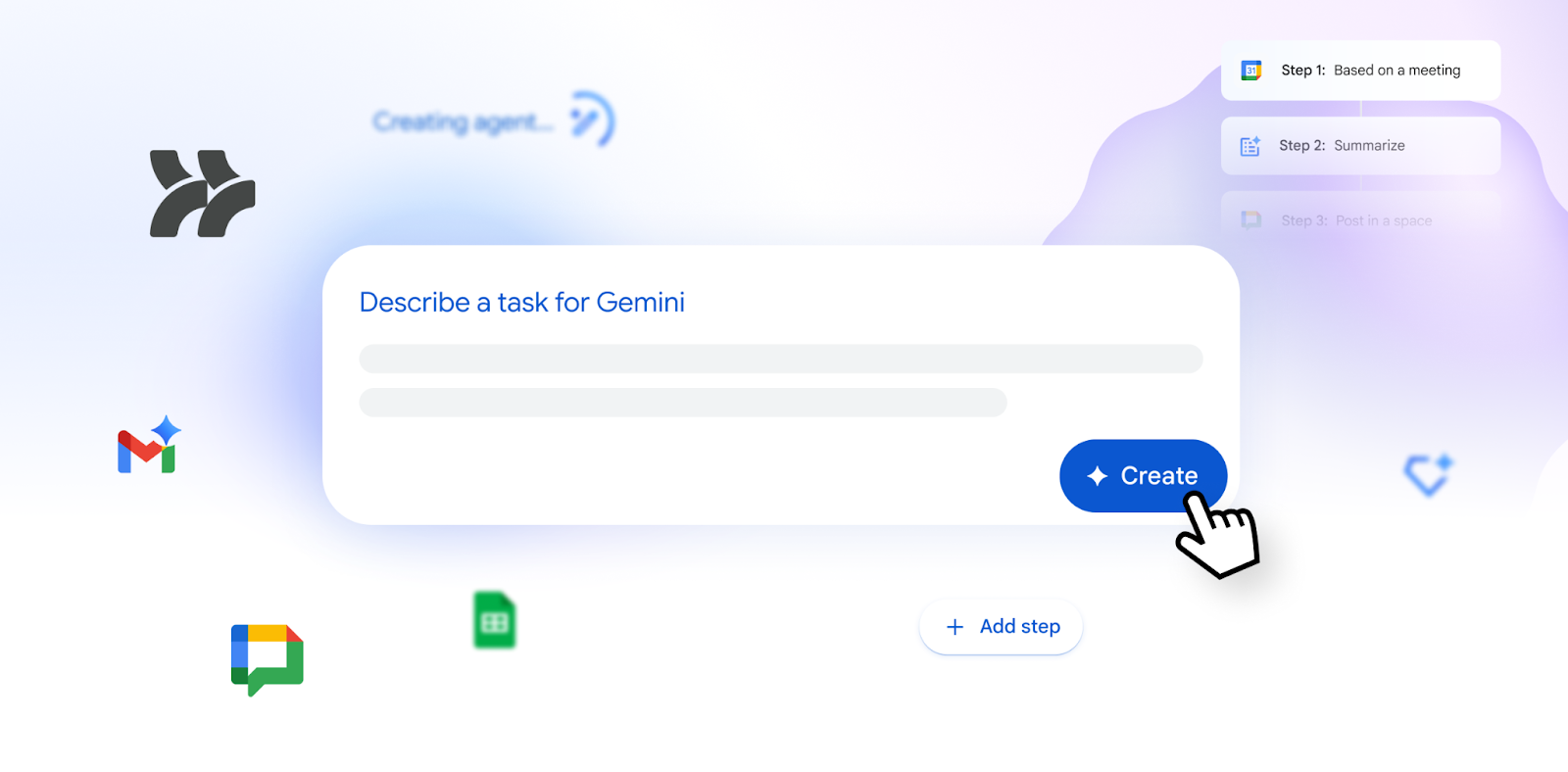
When I became Head of Security at Immunefi, one of the new tasks I faced was managing our Google Workspace. It's the company's foundational ecosystem/infrastructure, where not only account provisioning is managed but above all the entire security foundation of the organization. In companies where size justifies it, there are even specialist positions for Google Workspace Administrator.
And as is customary with this type of software, it's a real monster. The interface is confusing, not intuitive, and not immediate for those trying to use it. It's normal - it has so many possible configurations and so much data to digest that it seems an impossible task to guarantee a good user experience. And for someone who had never used Google Workspace - as was my case - such management is somewhat intimidating.
I thought my frequent complaints about Google Workspace's poor UX would eventually lead to investment from Google to improve its suite of enterprise products. And yet, I couldn't have been more wrong. At the end of 2025, Google launches Google Workspace Studio, which allows you to ask a Gemini agent to navigate the system's complexity instead of the user doing it. The user thus delegates the task's complexity to the agent. Invest in improving a bad UX? Better yet, invest in an agent that navigates that bad UX for the user!
In fact, LLMs already know all the ins and outs of these complex systems. From one of the most used software in the business world - like Google Workspace - to niche software, LLMs have themselves become subject matter experts. Just ask how to do it, and artificial intelligence provides the necessary steps. In this particular case, Google goes further and creates an agent that doesn't just inform the user how to navigate the tool, but does the work itself to achieve the intended goal. And suddenly, the Generalist gains the same powers as the Specialist.
The COBOL Case
Specialization in a specific niche language is also becoming less valuable compared to generalist characteristics. For example, there are numerous legacy systems in banking and other industries written in COBOL, a language with a reputation for being as antiquated as it is extremely resilient. For numerous reasons, there's great interest in modernizing such systems, migrating them to more modern (and… better?) languages. The problem is that COBOL programmers are rare as diamonds, which makes them more valuable (although the market is limited).
But then artificial intelligence enters the scene! Suddenly, anyone becomes capable of driving the modernization of such systems. Anthropic itself published a video demonstrating how to use Claude Code precisely for this purpose. The Specialist, once indispensable, now sees their niche shrinking. But above all, their advantage is no longer as competitive.
When a Colleague Beat Me with Claude Code
Recently, one of the engineers at my company showed me smart contracts (software that runs on blockchains) that he created for possible future use. My first reaction was confusion. In fact, I am the smart contracts specialist at my company, and I would expect such work to inevitably land on my digital desk. But it seems this colleague of mine ventured into this somewhat unfamiliar territory seeking to validate an idea quickly, using Claude Code and Anthropic's best code model.
I was amazed when I took a look at the smart contracts my engineering colleague made with the help of his new assistant, and saw that they were… phenomenal. The code was readable, well-structured, fulfilled its purpose and, in certain details, showed mastery of the particular realities of programming in the blockchain context. I didn't do a thorough audit, so there could be security issues. But that wouldn't be different from the code I would have produced: smart contracts always need a security audit.
My colleague's cunning and flexibility showed me that, thanks to the artificial intelligence tools at his disposal, he was able to develop excellent-level code in a niche where I am a specialist. And with drastically superior speed to mine.
The Change Has Limits (still…)
This doesn't mean the Specialist has become totally obsolete. There are domains where the cost of error is too high, or where Artificial Intelligence can't (yet?) unlock Generalists - cryptography, critical infrastructure, or other highly specialized cases. In these and other areas, deep knowledge remains difficult to replace, or at least the Specialist's return continues to be sufficient to justify the investment. And, of course, AI is not infallible: it hallucinates, produces code that looks correct but isn't.
The Generalist's advantage doesn't come just from using Artificial Intelligence agents, but from knowing how to identify opportunities where to apply it, whether to maximize productivity - or to unlock new ideas. This makes them more capable of causing disruption, innovating the business, and creating value. The Specialist, more focused on their niche, tends to use AI in a more restricted way and misses opportunities that the Generalist captures.
For the vast majority of software engineering, the balance has undoubtedly tilted to the most unexpected side.
What to Do Now?
When I started my career, the general advice was clear: "specialize." Although I did so in certain areas, I came to realize that my strength was always something else - versatility, the ability to jump between areas, learn quickly, and connect dots that others don't see. Artificial Intelligence comes precisely to amplify and value these capabilities.
For those starting today, traditional advice deserves to be revised. Invest in breadth, in curiosity, in mastering the tools that multiply your reach. Those who don't will have difficulty competing. And when companies need to hire, the choice will be between a screwdriver or a power drill.